As electricity costs continue to rise and green energy becomes a popular trend, investing in solar power systems is a smart choice for households, businesses, and production facilities. However, to achieve optimal performance, calculating the correct system capacity is the most important factor.
In this article, cergy.vn will guide you through determining the right capacity and choosing solar power equipment suitable for different needs—especially in regions with high solar potential such as Binh Thuan, Nha Trang, Dong Nai, and Tay Ninh.

1. Why is accurate calculation of solar system capacity important?
Designing and installing a solar system is not simply about buying equipment and placing it on the roof. To ensure investment efficiency and long-term stability, accurate system capacity calculation is a critical step in the consulting and design process.
Here’s why:
-
Meeting actual electricity demand
A properly sized system will generate enough electricity to power all household, business, or factory equipment—including high-consumption devices such as air conditioners, compressors, or production lines. Undersized systems force continued reliance on the grid, reducing investment value. -
Avoiding excess capacity – optimizing initial investment
Oversized systems lead to unused electricity during off-peak hours. Without storage batteries or grid feed-in, this surplus is wasted, increasing costs without added economic benefits. -
Faster return on investment (ROI)
A well-designed system, matched to real consumption and local sunlight, shortens the payback period. Typically, optimized systems pay off in 4–6 years and then operate with nearly zero running costs for 20–25 years. -
Ensuring stable and safe operation
Mismatched capacity can cause voltage overload, damaging inverters or household wiring. Undersized systems, on the other hand, cannot meet peak demand, especially in hot seasons when cooling and pumping systems work intensively. -
Adapting to local sunlight conditions
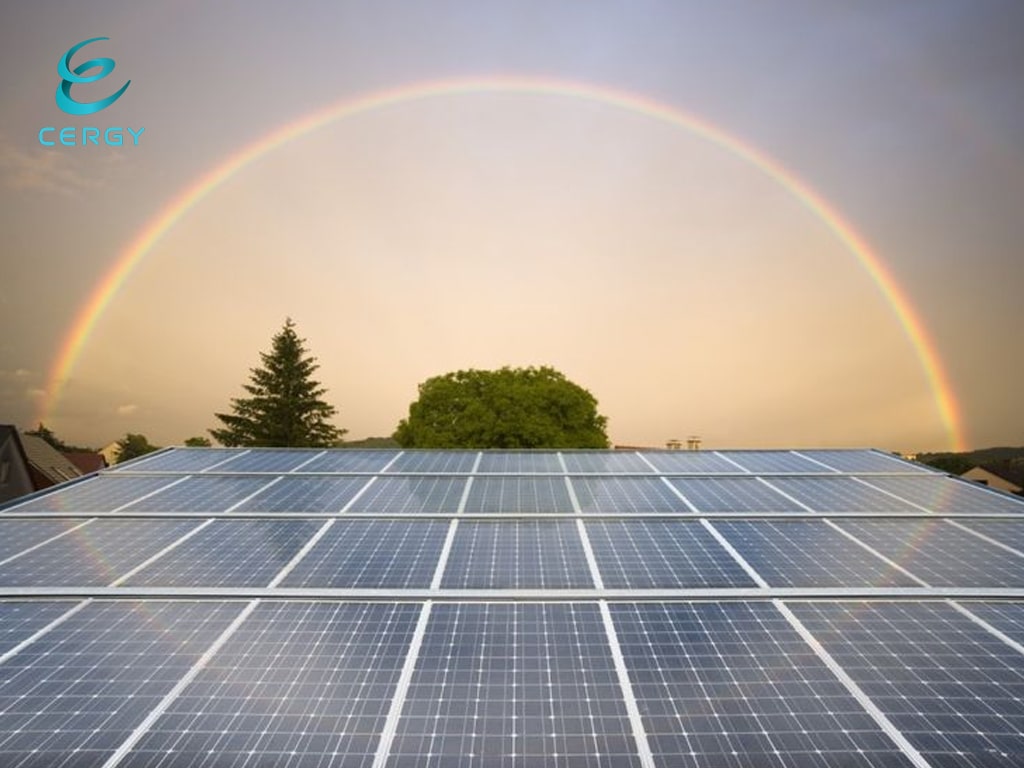
Solar radiation levels vary significantly across Vietnam. A 5kWp system in Binh Thuan may generate 15–20% more electricity than the same system in Hanoi. Ignoring local factors can cause major design and production errors.
2. Technical factors affecting solar system capacity
As a trusted provider of solar equipment and consulting services for hundreds of residential and industrial projects, Cergy always begins with surveying and analyzing these four factors:
a. Average monthly electricity consumption
This is the foundation for determining system size. Analyzing 6–12 months of electricity bills helps assess stable consumption levels.
-
Households: 300–800 kWh/month → systems from 3–6 kWp
-
Shops & small businesses: 1,000–3,000 kWh/month → systems from 10–25 kWp
-
Large factories: 10,000+ kWh/month → systems from 70 kWp+, often paired with hybrid inverters and storage for cost optimization
b. Effective sunlight hours
This directly impacts daily electricity yield. In Vietnam, effective sunlight ranges from 3.5–5.5 hours/day depending on location and season.
-
South Central (Binh Thuan, Khanh Hoa): 5–5.5 hours/day
-
Southeast (Binh Duong, Long An, Tay Ninh): 4.5–5 hours/day
-
North (Hanoi, Hai Phong): 3.5–4 hours/day
Using simulation software such as PV*SOL or PVSyst, we calculate projected output for each location.
c. Equipment efficiency
Device quality plays a decisive role:
-
Monocrystalline solar panels (Mono PERC): 19%–22% efficiency
-
On-grid inverter: 97%–98.5% conversion efficiency
-
Overall system efficiency: 75%–85% depending on installation conditions
High-quality equipment ensures stable output, longer lifespan, and lower maintenance costs.
d. Roof area and installation conditions
Space availability limits capacity. On average, 1 kWp requires 6–7 m² of free roof space. Other important factors include:
-
Roof orientation (South preferred)
-
Tilt angle (10–15 degrees)
-
Shading from nearby objects
Cergy uses professional shading analysis tools (Solar Pathfinder, SunEye) to ensure accurate design.

3. Formula for calculating solar system capacity
Basic formula:
System capacity (kWp) = Daily electricity consumption (kWh) / (Effective sunlight hours × System efficiency)
Example:
A household consumes 900 kWh/month ≈ 30 kWh/day. With 4.5 sunlight hours/day and 80% efficiency:
30 ÷ (4.5 × 0.8) ≈ 8.33 kWp
4. Key considerations when choosing solar equipment
For long-term performance, choose:
-
High-quality solar panels with 25+ years lifespan
-
Inverters matched to system type (on-grid, off-grid, or hybrid)
-
Durable mounting structures and certified cables for corrosion resistance and safe power transmission
At Cergy, we supply genuine solar equipment with long-term warranties, full-package installation across provinces like Binh Duong, Long An, Ba Ria–Vung Tau, transparent pricing, and professional maintenance services.
Conclusion
Accurate calculation of solar system capacity is the first and most important step in renewable energy investment. If you are unsure about choosing system size, equipment, or need an on-site survey, don’t hesitate to contact Cergy.vn for free expert consultation.
📞 Technical Hotline: 0386 247 686
🌐 Website: https://cergy.vn
📍 Cergy – Professional, efficient, and sustainable solar energy solutions for every project